



.png?revision=1764341863)


How to Clean a Coffee Machine?

You might think your kitchen is clean and tidy, but what germs could be lurking in places you can't see? Microbes thrive in warm, humid environments, and the inside of your coffee machine is the perfect place for them to multiply. A 2011 study revealed that coffee machines can contain harmful organisms such as yeast, mold, and coliform bacteria; these belong to a family that also includes bacteria like salmonella and E. coli.
If you're worried about what's hidden in your coffee machine, don't panic. Our cleaning experts know a thing or two about getting into even the most hard-to-reach places. Follow these tips and keep your coffee machine looking like new!
How often should a coffee machine be cleaned?
Depending on how often you use your coffee maker, you should clean it every 2-4 months. Even outside of these intervals, you should check it regularly and ensure it stays dry and well-ventilated. Mold thrives in darkness and humidity, so one of the best ways to prevent mold growth is to leave the lid of your coffee maker open when not in use. This allows the water inside to evaporate and light to reach areas where mold likes to grow.
If you notice your coffee has a bitter taste or your coffee maker has a strong odor while in use, even if it hasn't been that long since its last cleaning, it's time for a cleaning. There are many variables that can affect coffee makers, from water hardness to the type of beans you use, so look for signs that your coffee maker is dirty. The buildup of mineral deposits (also known as limestone) can affect your coffee maker's performance and consequently shorten its lifespan.
If you're considering buying a coffee machine, you can check out our article titled " Best Home Coffee Machines of 2025 ". 
How to clean a coffee machine?
Many commercial coffee machine cleaning solutions are available on the market. These products are generally sold as descaling solutions and are available in tablet, powder, or liquid form. Most work using the method below, but always follow the instructions on any commercial cleaning product.
Step 1 — If your coffee machine has a reservoir, measure out your cleaning solution and add it to the water reservoir.
Step 2 — For tablet and powder cleaning solutions, add enough water to activate the cleaner. See product packaging for details.
Step 3 — Run your coffee machine as usual until the reservoir is empty. Empty the dirty water.
Step 4 — Fill the reservoir and repeat the process.
Step 5 — Remove and discard any remaining cleaning product from the reservoir.
Step 6 — Refill the reservoir with clean water and run it at least two more times to remove any traces of the cleaning product. 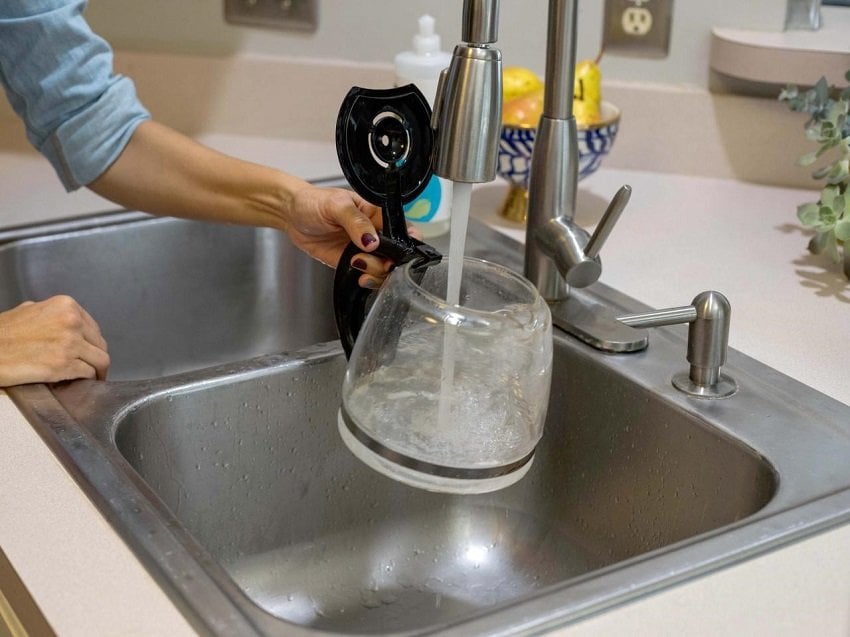
How to clean coffee machine stains?
Coffee machines are often susceptible to various stains such as coffee residue, hard water marks, and limescale buildup.
- To remove coffee stains from your coffee machine, fill it with boiling water and add a dish soap capsule (or some dish soap). Let it sit for half an hour, then empty it and rinse with clean water.
- Use salt water to remove stains. Salt is a natural abrasive and a strong absorbent, so it has great cleaning properties. Sprinkle salt into the coffee maker, let it sit for 5-10 minutes, then fill with boiling water. Stir to dissolve the salt, then let it sit for 30-60 minutes before draining and rinsing with clean water.
- Most hard water deposits are made of calcium carbonate, a base. You can use acidic substances to break them down and remove them. These include vinegar, lemon juice, and citric acid. Simply use a 50/50 mixture of water and acid and soak the coffee maker to remove the stains.
How to clean a coffee machine with vinegar?
Vinegar is a versatile and effective cleaning solution. It is safe for contact with food; therefore, even if not completely rinsed away, it will not harm health (though it might affect the taste of your coffee).
Step 1 — Fill the container with white vinegar and water in a 50/50 ratio.
Step 2 — Run a brewing cycle, but stop the coffee machine halfway through.
Step 3 — Let your coffee maker sit for 30 minutes to allow the vinegar to take effect.
Step 4 — Complete the brewing cycle and discard the dirty water.
Step 5 — Rinse your coffee machine with plain water at least twice until the vinegar smell is gone.
That's all you need to do to clean your coffee maker! You can use distilled vinegar, white vinegar, or even apple cider vinegar. Don't worry about the taste or smell. As long as you rinse your coffee maker thoroughly after cleaning with vinegar, you won't notice any unpleasant odor or taste.
If you're unsure if you've washed the vinegar thoroughly enough, try making a small test cup of coffee to see. It might not taste great, but vinegar isn't harmful, so there shouldn't be any negative side effects.
How to clean a coffee machine without vinegar?
If you don't have vinegar, you can use citric acid or lemon juice instead. Because they are slightly acidic, they work just as well as vinegar. This helps break down the calcium carbonate that builds up inside coffee machines. Many people prefer using lemon juice or citric acid as a cleaner because their scent is more pleasant than vinegar. However, lemon juice, in particular, can be sticky if not cleaned thoroughly.
Both lemon juice and citric acid (citric acid is the main acid in lemon juice) are food-contact safe; therefore, even if residue remains, it does not pose a risk to your health. You can use fresh lemon juice or a store-bought bottle of lemon juice to clean your coffee maker.
How to clean a coffee machine with baking soda?
Baking soda is also a great cleaning product, especially when combined with other cleaners.
- Try filling a stained coffee maker with boiling water and adding 2 tablespoons of baking soda. Stir until dissolved and let it sit for 30 minutes to remove the stains.
- Fill the reservoir and add 1/2 cup of baking soda. Run the coffee maker to flush it. Drain the water. Run it two more times with clean water to remove any remaining residue.
- Before running the cleaning cycle with vinegar or lemon juice, add a tablespoon of baking soda to the base of your coffee maker. The reaction between the baking soda and the acid will create an even more surprising cleaning power!
- You can also use baking soda to test if you've successfully cleaned all the vinegar/citric acid/lemon juice from your coffee maker. Add a pinch of baking soda to the bottom of the coffee maker and run the fresh water cycle. If you see any foaming, it means there's still some acid left!